Michael Steiner

profile photo

I am currently a PhD student at Graz University of Technology at the Institute of Visual Computing (IVC), supervised by Markus Steinberger. Most of my recent work focused on novel view synthesis and neural rendering. My personal research interests lie in Visual Computing, Machine Learning, and all topics concerning Parallel Compute in general.

In 2023 I received my Master's Degree (with distiction) for Computer Science at Graz University of Technology, with a Major/Minor in Visual Computing/Machine Learning.

Email  /  Scholar  /  Github

Research Papers

clean-usnob
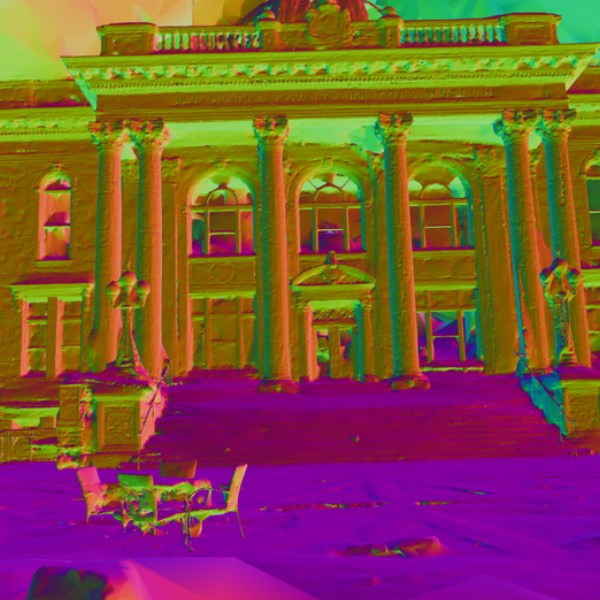
SOF: Sorted Opacity Fields for Fast Unbounded Surface Reconstruction
Lukas Radl, Felix Windisch, Thomas Deixelberger, Jozef Hladky, Michael Steiner, Dieter Schmalstieg, Markus Steinberger.
SIGGRAPH Asia, 2025.

We analyze and improve Gaussian Opacity Fields, and incorporate per-pixel sorting, exact depth and novel losses to enable rapid extraction of unbounded meshes from 3D Gaussians.

AAA-Gaussians: Anti-Aliased and Artifact-Free 3D Gaussian Rendering
Michael Steiner*, Thomas Köhler*, Lukas Radl, Felix Windisch, Dieter Schmalstieg, Markus Steinberger.
ICCV (Poster Highlight), 2025.

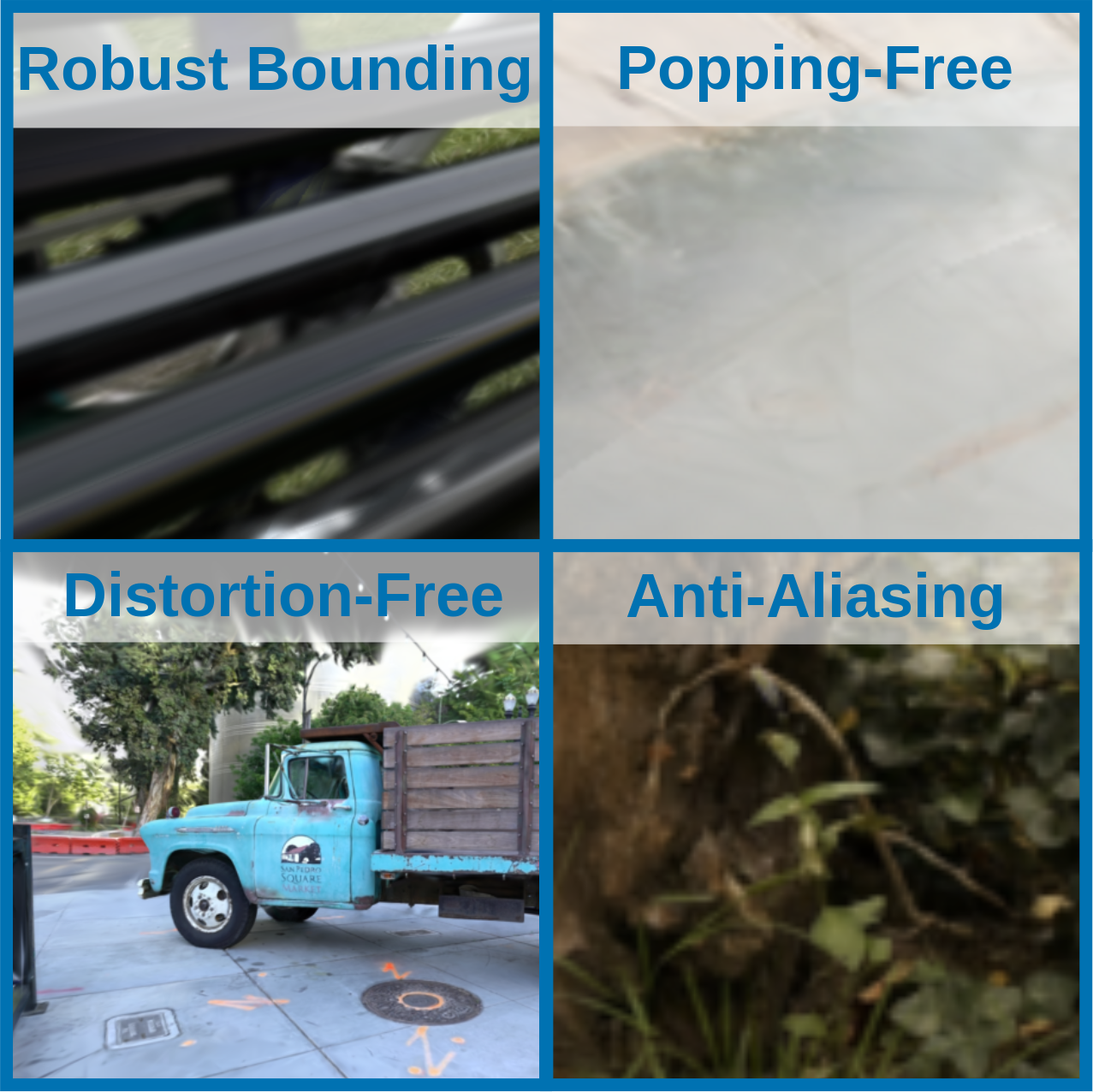
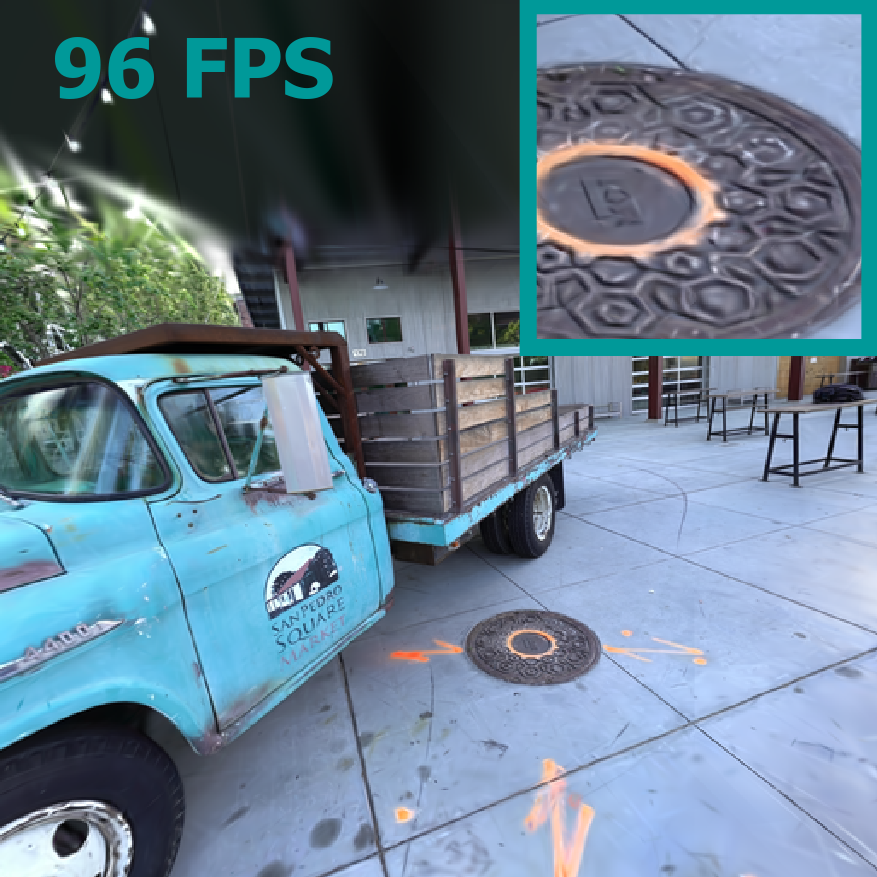
We introduce an adaptive 3D smoothing filter to mitigate aliasing and present a stable view-space bounding method that eliminates popping artifacts when Gaussians extend beyond the view frustum. Our method achieves state-of-the-art quality on in-distribution evaluation sets and significantly outperforms other approaches for out-of-distribution views.

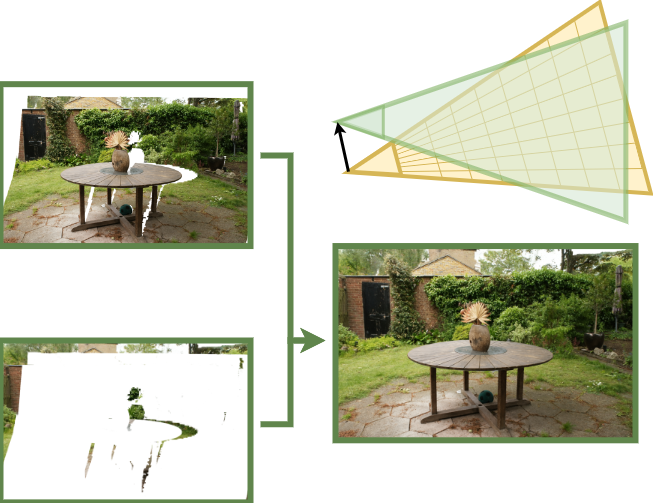
Image-Based Spatio-Temporal Interpolation for Split Rendering
Michael Steiner*, Thomas Köhler*, Lukas Radl, Brian Budge, Markus Steinberger.
High-Performance Graphics (CGF), 2025.

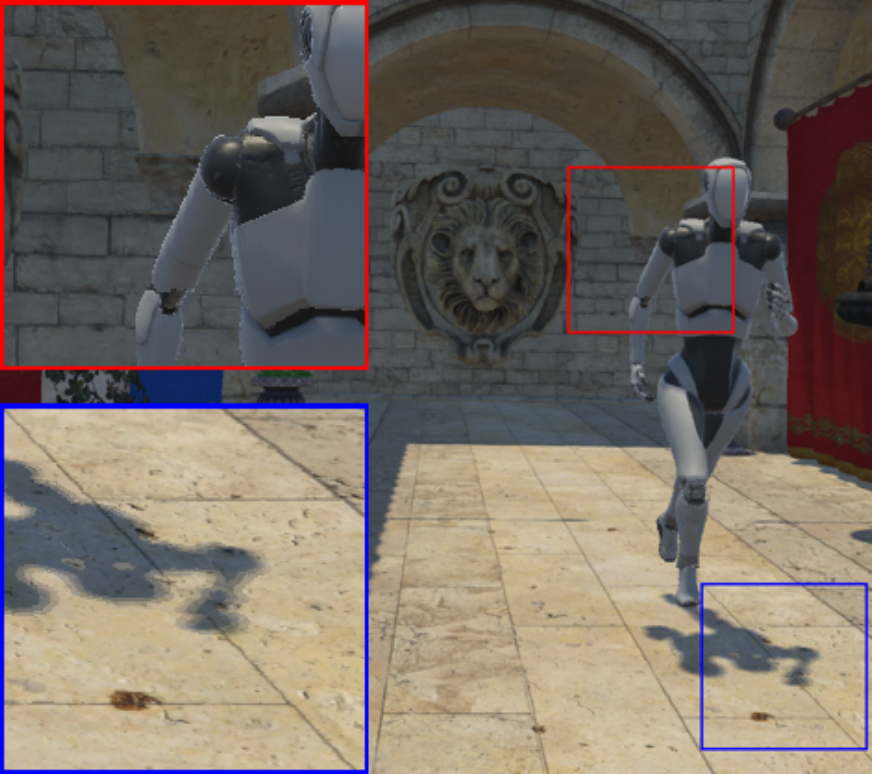
Our method enables spatio-temporal interpolation via bidirectional reprojection to efficiently generate intermediate frames in a split rendering setting, while limiting the communication cost and relying purely on image-based rendering. Furthermore, our method is robust to modest connectivity issues and handles effects such as dynamic smooth shadows.

VRSplat: Fast and Robust Gaussian Splatting for Virtual Reality
Xuechang Tu, Lukas Radl, Michael Steiner, Markus Steinberger. Bernhard Kerbl, Fernando de la Torre.
I3D (PACMCGIT), 2025.

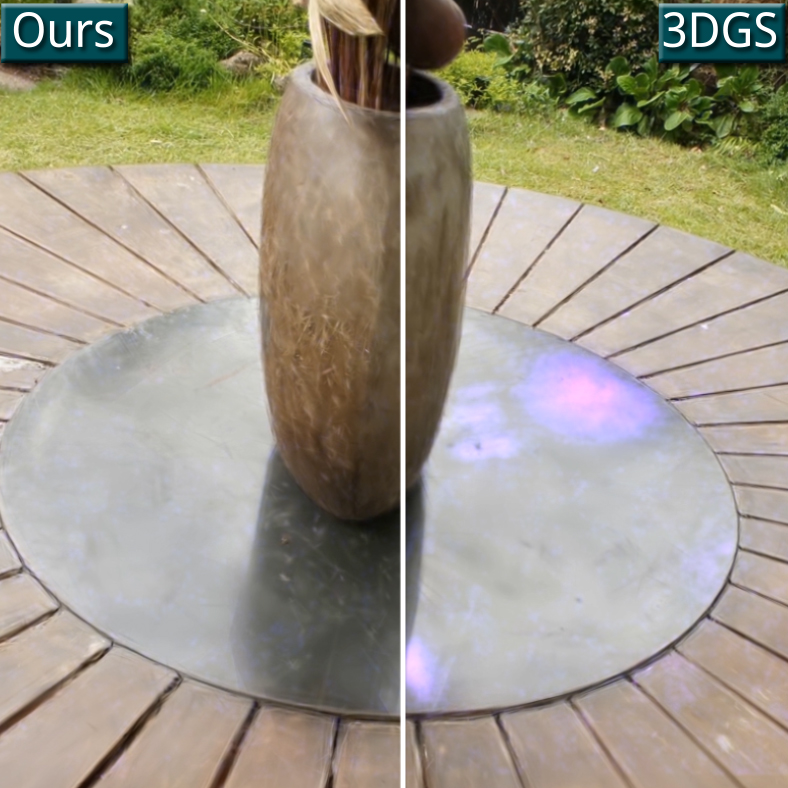
VRSplat combines and extend several recent advancements in 3DGS to address challenges of VR holistically. We show how the ideas of Mini-Splatting, StopThePop, and Optimal Projection can complement each other, by modifying the individual techniques and core 3DGS rasterizer.

StopThePop: Sorted Gaussian Splatting for View-Consistent Real-Time Rendering
Michael Steiner*, Lukas Radl*, Mathias Parger, Alexander Weinrauch, Bernhard Kerbl, Markus Steinberger.
SIGGRAPH (TOG), 2024.

3D Gaussian Splatting performs an approximate global sort of primitives, leading to undesireable popping artifacts. By hierarchically sorting primitives in a tile-based rasterizer, we allow for view-consistent rendering while maintaining real-time performance.

Frustum Volume Caching for Accelerated NeRF Rendering
Michael Steiner, Thomas Köhler, Lukas Radl, Markus Steinberger.
High-Performance Graphics (PACMCGIT), 2024.

We accelerate NeRF rendering of high-quality video sequences by caching and temporally reusing NeRF latent codes. Our frustum-aligned volumetric cache datastructure together with our novel view-dependent cone encoding allow for smaller latent codes and fast re-evaluation, leading to render speed-ups of up to 2x for our Instant-NGP based model.

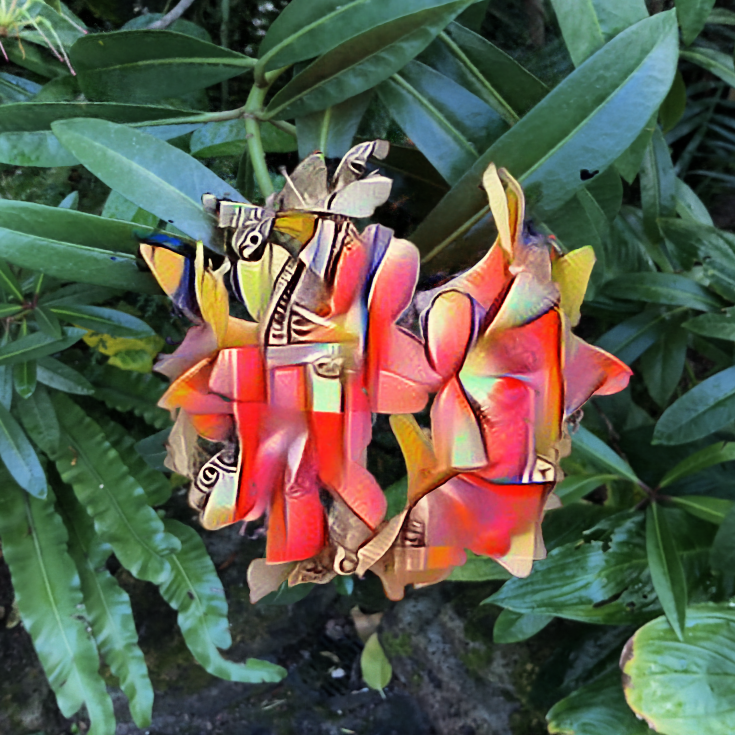
LAENeRF: Local Appearance Editing of Neural Radiance Fields
Lukas Radl, Michael Steiner, Andreas Kurz, Markus Steinberger.
CVPR, 2024.

Locally Stylized Neural Radiance Fields via point-based 3D style transfer with geometry-aware losses - reduced background artefacts, more detail retention and view-consistency.

clean-usnob
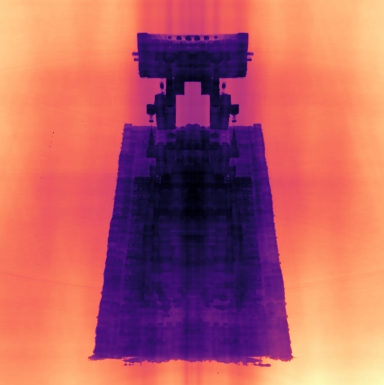
Analyzing the Internals of Neural Radiance Fields
Lukas Radl, Andreas Kurz, Michael Steiner, Markus Steinberger.
CVPR Workshop on Neural Rendering Intelligence, 2024.

Using density estimates derived from activations for inverse transform sampling in NeRFs allows for faster inference and comparable visual quality.

Thank you to Jon Barron for providing the public source code of his website.